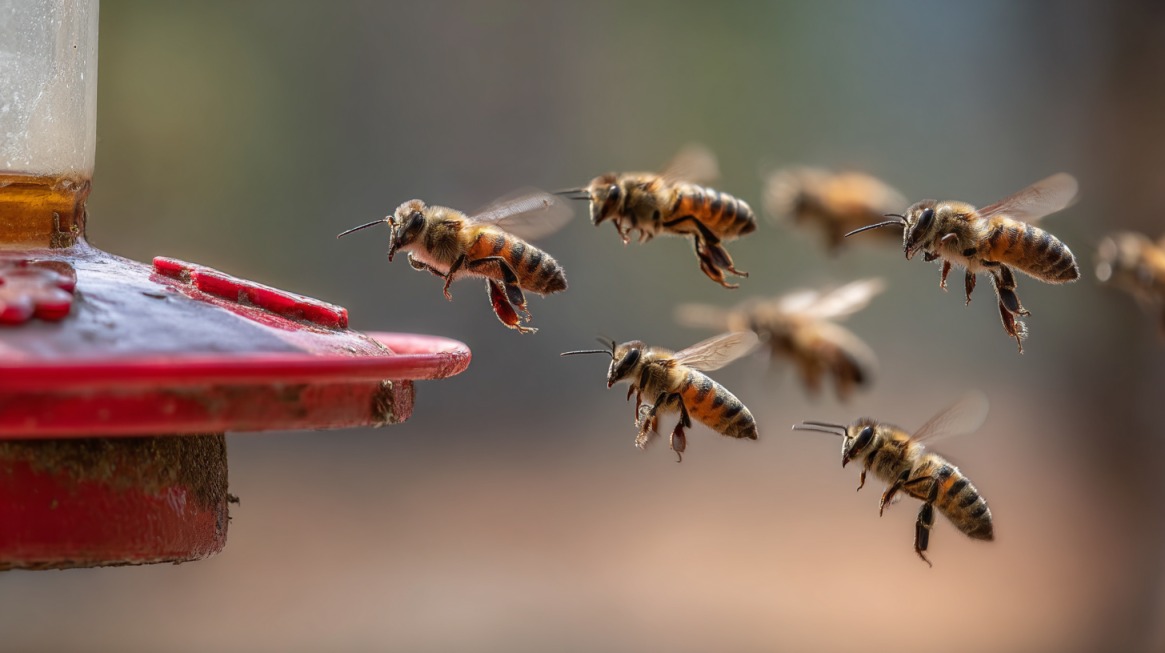

Hummingbirds push limits of flight, endurance, and memory in ways few animals can match. Tiny bodies move with precision powered by relentless feeding and rapid muscle activity.
Every second demands huge amounts of energy, turning each day into a cycle of searching, feeding, defending, and navigating.
Many behaviors reveal surprising complexity once you look at how these birds function. Agility allows quick turns and instant braking, while high metabolism forces continual refueling. Sharp recall helps them track countless flowers across wide areas.
Migration adds even more remarkable feats, as some travel impressive distances despite their size.
Closer attention uncovers even more unexpected traits, including advanced aerial control, vibrant structural color, and survival strategies shaped by intense environmental pressure.
Every detail shows a creature built for speed, efficiency, and remarkable adaptability.
1. They Can Fly in All Directions – Including Backward
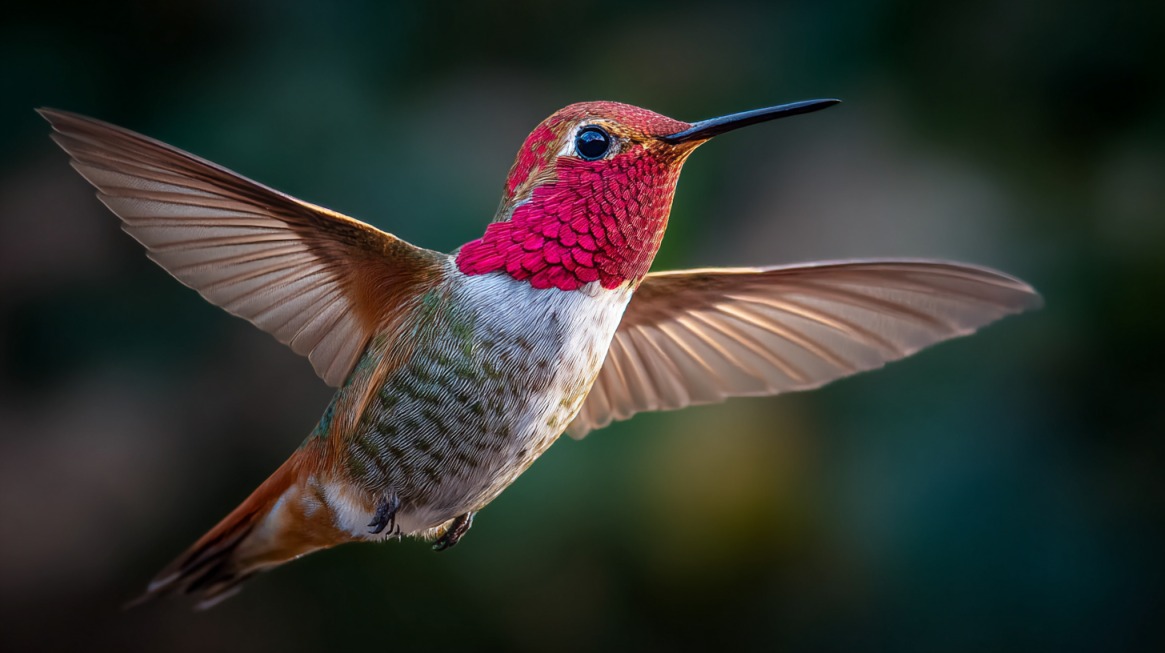
Hummingbirds maneuver through the air with precision that surprises anyone seeing them up close.
Wings create lift during both the forward and backward stroke because of a figure-eight path, which gives them control unmatched by other birds.
Backward motion requires no added effort, allowing easy access to flowers positioned in tight spots or beneath large petals.
Additional expansion adds more detail about their aerial skills.
- Sudden side-to-side movement while hovering, used to avoid rivals
- Rapid braking in front of flowers, preventing hard collisions
- Vertical launches straight upward without any buildup of speed
- Swift rotations in midair that let them defend territory or chase insects
- Ability to remain motionless in a hover, even in shifting wind patterns
Such mastery of movement comes from strong chest muscles, flexible wing joints, and a nervous system capable of processing visual cues at remarkable speed.
2. Their Hearts Beat Over 1,200 Times Per Minute
Heart strength in hummingbirds reaches extremes rarely matched in animals of any size.
Rates often rise above 1,200 beats per minute during flight, then fall to 500–600 during rest. Excited or agitated birds may exceed 1,000 beats per minute while defending nectar-rich spots.
Up to 2.5% of body weight can consist of heart muscle, giving them the power needed for constant hovering.
Circulation must remain fast and efficient every moment. Rapid breathing supports heavy oxygen demand, and blood volume is high for such small bodies. Strong chest muscles require a steady supply of oxygen and nutrients, especially during sudden bursts of speed or long periods of flight.
Such constant metabolic pressure explains why they eat so frequently and never slow down unless absolutely necessary.
3. They’re Tiny, but They Migrate Across Oceans
@coppervinefeeders Some species, like the Ruby-throated Hummingbird, fly 500+ miles nonstop across the Gulf of Mexico during migration. #hummingbird #nature #fyp #fypシ゚viral #hummingbirdsoftiktok ♬ suono originale – Francesco Catena971
A bird smaller than a credit card can cross more than 500 miles of open ocean in a single push.
Many Ruby-throated Hummingbirds complete this crossing while heading toward Central America, relying entirely on stored fat.
A feeding stage called hyperphagia begins before migration, during which food intake rises dramatically.
- Fat stores can increase to nearly half of the total body weight
- Flight muscles adapt to sustained, uninterrupted movement
- Navigation uses daylight cues, internal biological timing, and possibly magnetic orientation
- Strong winds may assist or challenge the journey, yet many complete it regardless
- Migratory routes remain consistent across generations, suggesting strong internal programming
4. Their Feathers Don’t Have Pigment, They Use Light
Color in hummingbirds comes from microscopic structures that refract light rather than chemical pigment.
Those layers bend incoming light, causing iridescent flashes that shift as angles change.
Many males use these bright displays to attract attention or signal dominance in feeding areas.
Bright structural color gives hummingbirds an instantly recognizable glow, especially on sunny days.
5. They Remember Every Flower, And Even You
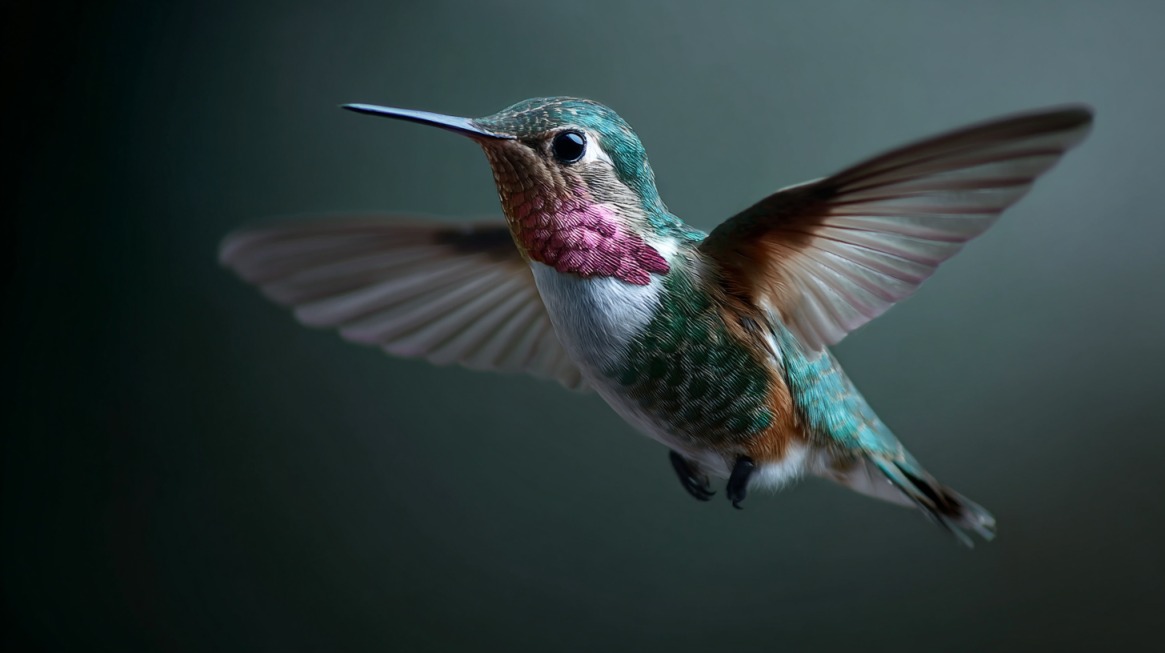
Remarkable memory helps hummingbirds manage feeding routes across large areas.
They track each flower’s nectar supply and recall how long refilling takes, allowing them to visit at the perfect moment. Feeders remain equally memorable, and many individuals recognize familiar humans.
- Precise mapping of feeding territories
- Awareness of which spots offer the best food at certain times
- Recognition of safe locations and trustworthy observers
Brain size relative to body mass ranks among the highest in bird groups, helping them adapt quickly to new patterns.
6. They Eat Twice Their Body Weight Every Day
Daily survival relies on nonstop feeding because their metabolism runs at an extraordinary speed. Nectar provides fast sugar that powers hovering, diving between flowers, and bursts of territorial chasing. Insects supply essential protein for muscle repair, feather growth, and overall health.
Without constant refueling, energy levels drop quickly.
Up to twice their body weight may be eaten in a single day, especially during intense activity such as courtship flights or long foraging periods. Wingbeats often range between 60 and 80 per second, while the Horned Sungem reaches an impressive 90.
Such rapid movement demands a steady stream of calories, leaving little room for extended rest.
Feeding behavior expands even further when considering how they manage time, space, and energy. Movement patterns often reflect strategies designed to conserve strength while maximizing intake.
7. Feeders Help, But Only If Maintained Properly
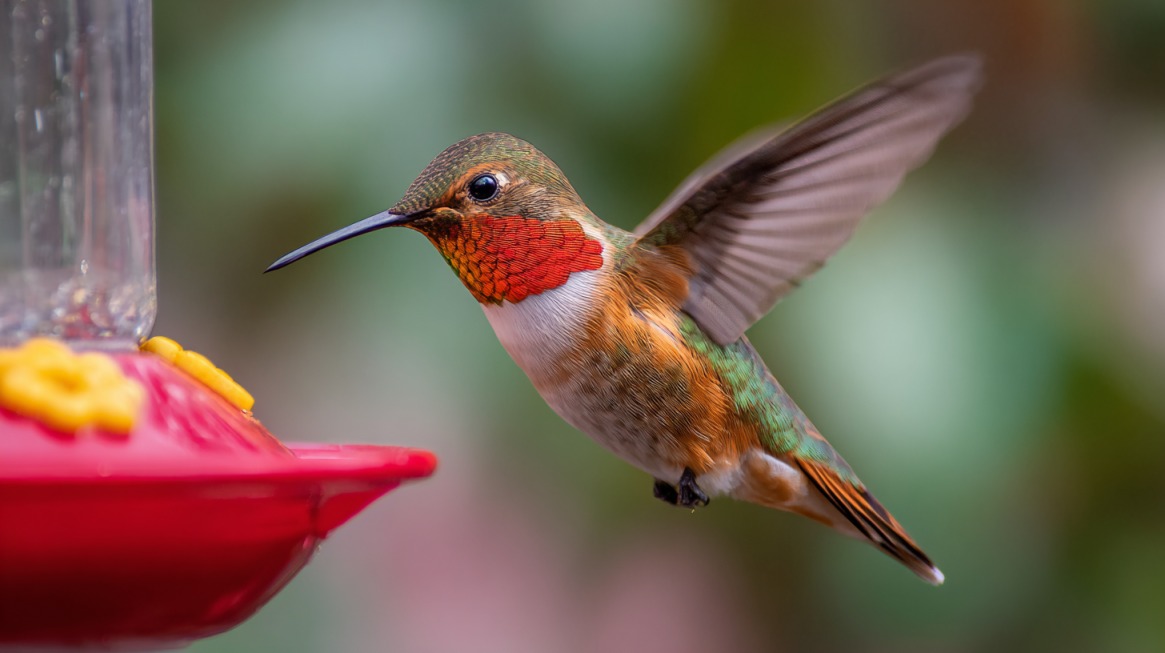
Feeders offer essential support during migration periods, cold snaps, or times with limited flower blooms.
A simple mixture of four parts water and one part sugar works best. No dye should be added, and regular cleaning protects birds from mold or fermentation.
- Rinse with hot water every two to three days
- Scrubbing ports to remove residue
- Replacing any cloudy mixture immediately
Well-maintained feeders act as reliable energy stations during stressful seasons.
8. They Enter Torpor to Survive Harsh Conditions
Harsh nights or scarce food can push hummingbirds into a temporary state called torpor.
Body temperature can drop from around 104°F to roughly 48°F as metabolism slows dramatically. Energy use falls so low that survival becomes possible even when no food remains.
During torpor, hummingbirds lose responsiveness, slow breathing, and enter a near-motionless state.
Sunrise usually triggers a gradual return to activity, allowing them to warm up and resume feeding.
9. Their Tongues Work Like Tiny Pumps
Hummingbird tongues collect nectar in a way that surprises many researchers. The tongue splits into two narrow grooves that open and close at a rapid speed once inside a flower.
Capillary action alone cannot explain the process; instead, the tongue acts like a fast, flexible pump that traps nectar and pulls it inside during each lick.
- Extension nearly twice the length of the bill
- Retraction at incredible speed, allowing up to 20 licks per second
- Flattening during entry and expansion during exit, maximizing nectar capture
- Ability to reach deep into tubular flowers that other birds cannot access
Such tongue mechanics help hummingbirds extract energy with precision during every feeding visit.
10. Their Eggs Are Among the Smallest of Any Bird
Hummingbird eggs weigh about as much as a small jellybean and measure roughly the size of a pea.
Nests often match that tiny scale, sometimes no larger than a walnut shell. Soft plant fibers, spider silk, and delicate leaves help create flexible walls that expand as chicks grow.
Small eggs and carefully engineered nests give their young a safe start in life despite their fragile size.
The Bottom Line
Hummingbirds deliver extraordinary feats in tiny bodies.
Power, speed, awareness, and adaptability combine to create one of the most impressive groups of birds in the Americas.
Spotting one at a flower or feeder offers a glimpse into strategies shaped by intense energy demands and remarkable survival skills.