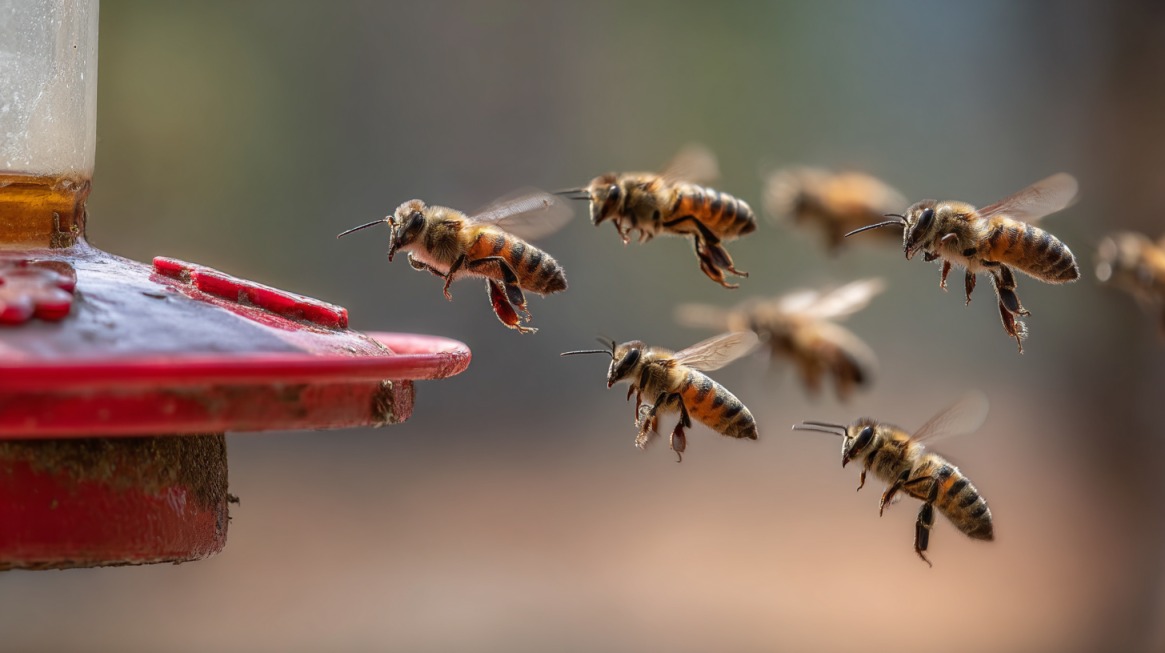
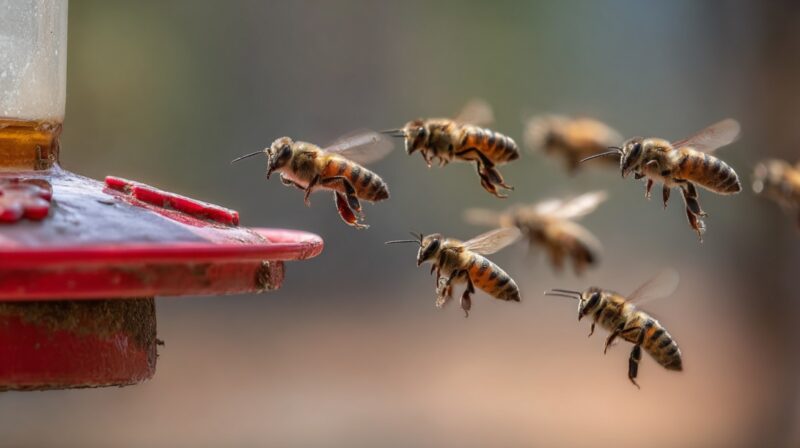
Many homeowners notice bees gathering around hummingbird feeders because both seek sweet nectar.
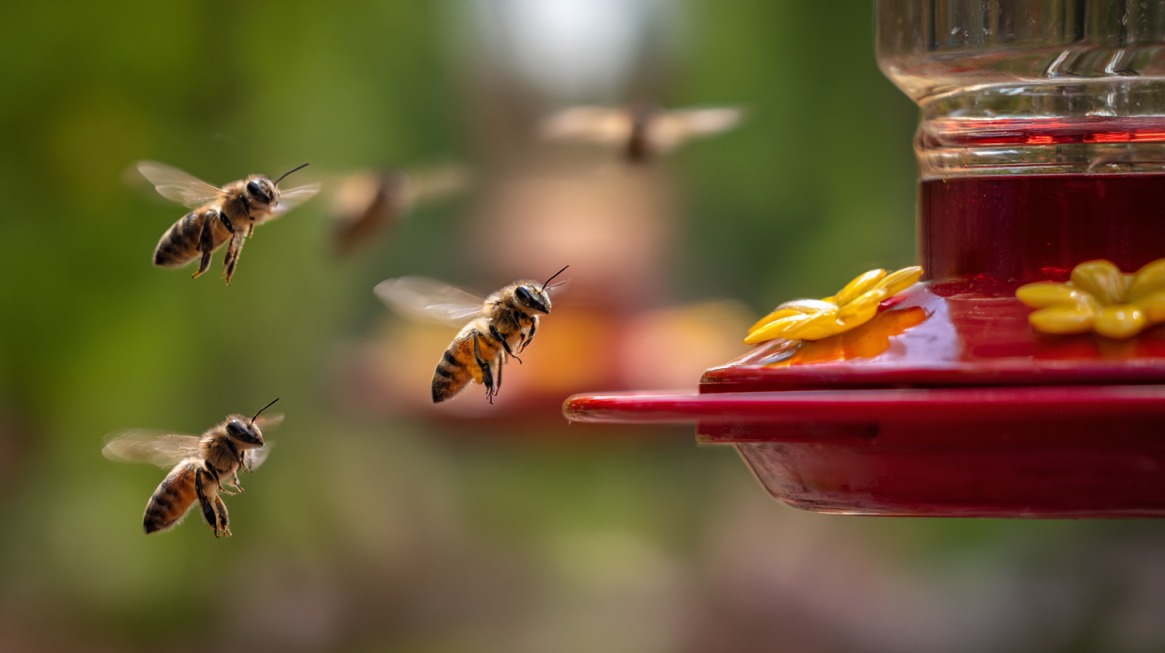
Bees often crowd ports, which can scare away hummingbirds and interrupt feeding. In rare cases, hummingbirds may even suffer stings that can be fatal due to their tiny size.
A better approach focuses on gentle methods that protect pollinators while keeping feeders available for birds.
Just a few small adjustments can create a safer and more enjoyable environment for both species.
1. Choose the Right Feeder Design
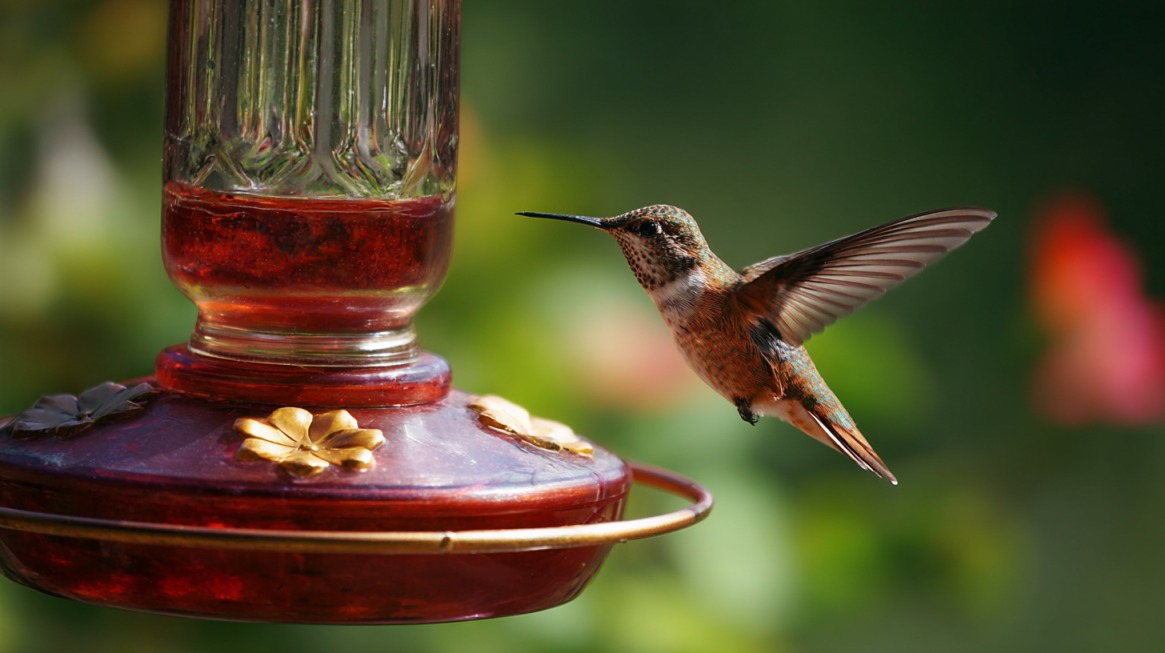
Saucer-style feeders offer one of the most effective ways to protect nectar from bees because nectar sits deeper in the reservoir, placing it far out of reach.
Many bees attempt to reach down into ports but cannot access nectar positioned below their tongue length.
Hummingbirds, on the other hand, feed with ease due to their long tongues and ability to hover with precision.
Small feeding ports with no perches also reduce bee activity because bees prefer stable landing spots. A feeder without perches limits their ability to settle and keeps ports reserved for birds.
Built-in insect guards contribute additional protection by creating a narrow entry point that bees cannot move through, while hummingbirds pass without difficulty.
- Saucer-style construction keeps nectar out of reach
- Small ports limit bee access
- No perches reduce landing opportunities for bees
2. Go Red, Not Yellow
Color plays a major role in how both hummingbirds and bees locate food sources.
Red draws hummingbirds in quickly due to their natural attraction to vivid shades often found in tubular flowers. Yellow draws bees for similar reasons, encouraging them to investigate anything with a bright appearance.
Feeders created with red bases or red tops reduce insect interest noticeably. Any yellow accents on a feeder can be painted with safe red paint, preventing unnecessary insect activity.
Careful colour selection helps ensure visits from hummingbirds while discouraging bees from gathering in large numbers around ports.
3. Add Nectar Guards or Insect Barriers
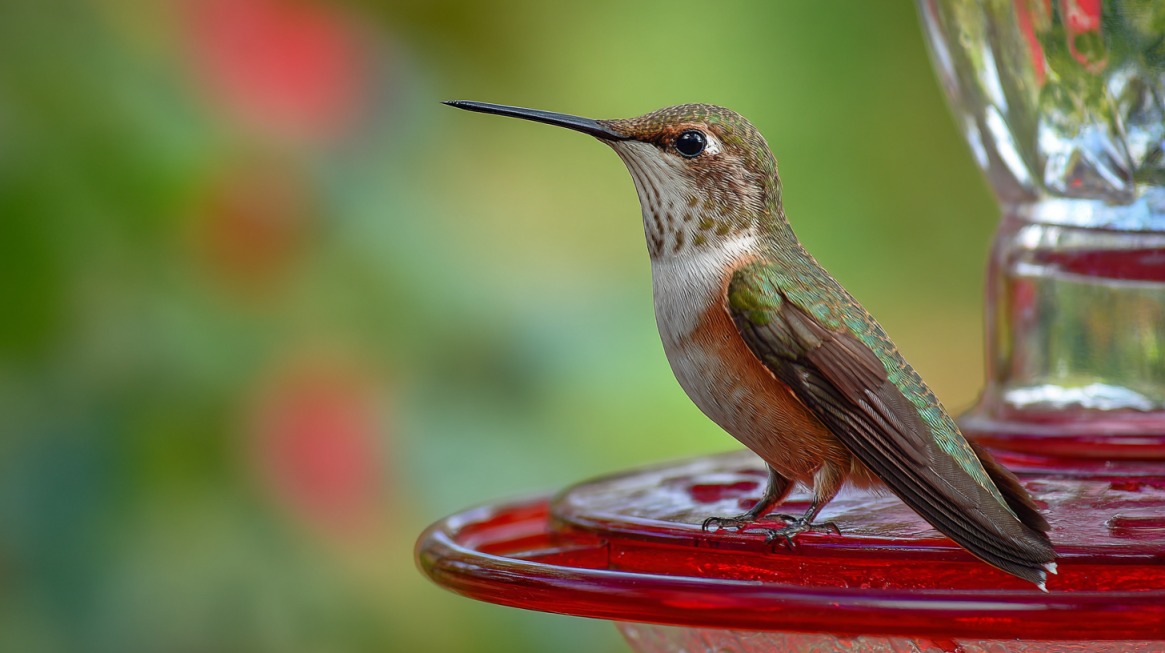
Nectar guards create a narrow opening that only a hummingbird’s tongue can reach.
Bees lack the reach needed to access nectar, so activity declines once these guards are attached. Guards also stop insects from crawling inside ports and reduce contamination of the feeder’s interior.
A simple homemade option involves inserting short pieces of tubing inside ports so nectar sits more than a quarter inch below the entrance.
Many bees cannot reach nectar that sits deeper than that distance, leading them to lose interest quickly.
4. Plant a Pollinator Garden
A dedicated pollinator area supports bees while drawing them away from hummingbird feeders. Abundant nectar sources encourage bees to stay occupied among blossoms instead of competing with birds at ports.
Popular plant choices thrive in garden settings and provide reliable nectar throughout warm seasons.
- Zinnias
- Cosmos
- Sunflowers
- Lavender
- Black eyed Susans
- Beebalm
Native plants often supply long-lasting nectar and provide habitat for beneficial insects. Positioning this garden at a distance from feeders funnels bee traffic toward flowers rather than hummingbird feeding stations.
5. Plug and Prevent Leaks
Sticky drips on feeder exteriors attract bees instantly because exposed nectar creates a scent trail that insects detect quickly.
Frequent inspection helps catch small gaps along seams and plug potential leaks early. A tight seal prevents nectar from seeping out while still protecting the feeding ports.
Plumber’s tape works well as long as it never touches nectar stored inside.
Dry, clean surfaces make feeders significantly less appealing and reduce the number of insects gathering in the area.
6. Move Feeders Regularly
Many bees navigate by memory. Once a feeder becomes familiar, bees return repeatedly.
Shifting a feeder a few feet away disrupts patterns bees rely on.
A four foot move often confuses insects enough that they give up, while hummingbirds quickly locate their food source through visual cues and strong spatial recognition.
Movement also helps distribute birds more evenly across your yard, reducing crowding at one spot.
7. Hang Feeders in the Shade
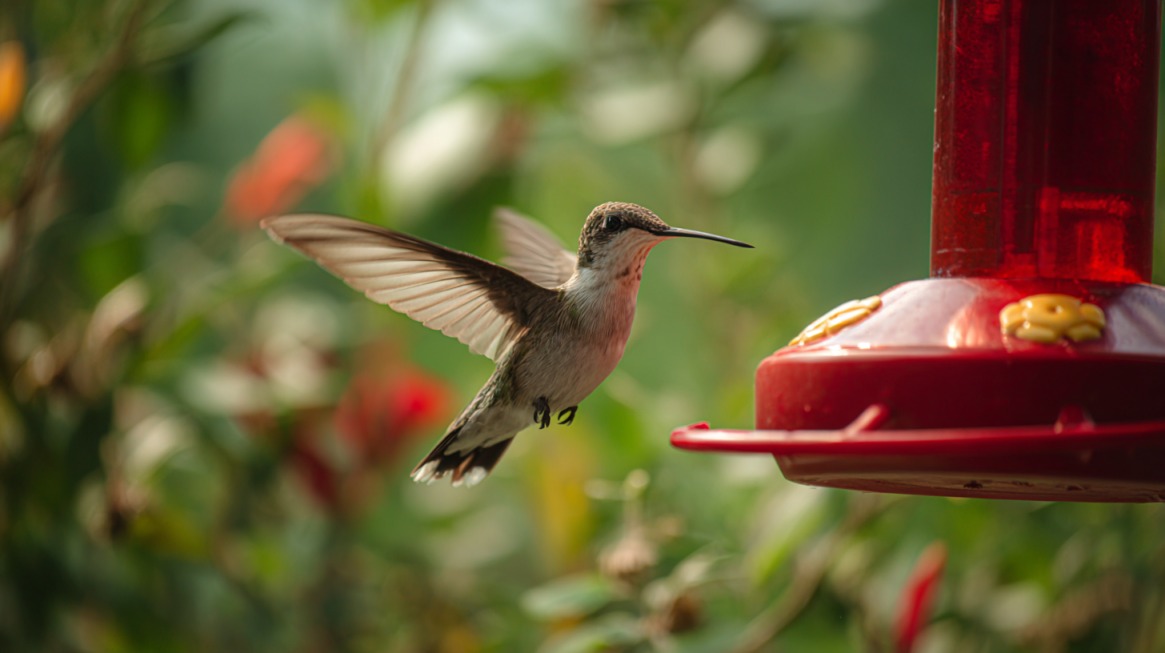
Cool areas reduce insect attraction because bees prefer warm, sunlit spots where nectar ferments faster and produces stronger scents.
Shaded placements reduce both temperature and scent intensity. Fewer insects gather in those areas, making shaded feeders more suitable for hummingbirds.
Lower temperatures also slow spoilage, resulting in fresher nectar. Birds feed comfortably in these calm, cooler spaces.
- Cooler temperatures reduce nectar scent
- Lower insect activity
- Slower fermentation of nectar
Why Bees Are Attracted to Hummingbird Feeders
Sweet nectar in feeders closely matches the sugary liquid bees seek in flowers, so feeders naturally register as a valuable food source.
Sugar water releases a noticeable scent, especially once it warms up in the sun. Warmer nectar gives off stronger odor cues that traveling bees can detect at surprising distances.
Once a few bees find that source, they often recruit more by sharing its location with others in the colony.
Bright colors work like visual signs for pollinators. Red mainly draws hummingbirds, yet any yellow sections or floral patterns can grab bee attention. Shiny plastic, glass reflections, and sunlit surfaces also catch an insect’s eye, encouraging closer inspection.
Leaks, spills, and sticky rings of dried nectar act like open buffet lines, making ports and seams extremely busy.
- Hot afternoons that warm nectar and boost scent strength
- Feeders are placed in full sun with little shade during the day
- Containers positioned near busy flowering plants where bees already travel
- Older nectar that has started to ferment and produce an even stronger smell
Once bees recognize a feeder as reliable, they remember its position and return again and again. Hummingbirds may then hesitate to approach or leave altogether if too many insects cluster around ports.
Careful management of scent, placement, and cleanliness greatly reduces that crowding.
What to Avoid
Harsh chemicals around feeders create serious risks for both bees and hummingbirds.
Pesticides and insecticides often persist on surfaces, in soil, and in water, so even a small spray near a feeder can end up on flowers, foliage, or the feeder itself.
Birds may ingest contaminated nectar or touch treated surfaces with their feet and bills. Bees can carry chemical residues back to their colonies, where other individuals, including larvae, may be exposed.
Strong essential oils require caution as well. Some popular options, such as peppermint or eucalyptus, might discourage insects, yet concentrated aromas can irritate hummingbirds’ sensitive respiratory systems.
Oils also may leak into nectar accidentally or coat ports, altering taste and discouraging birds.
Traps designed for bees may sound like an easy fix, yet they often attract extra insects into the yard.
Many trap designs cause slow or painful deaths, which does not match a pollinator-friendly approach. Dead insects around a feeding area also send an unhealthy signal about overall habitat quality.
Closing Thoughts
A combination of strategies works best. Red feeders, shaded placement, nectar guards, and routine cleaning keep bees away without harming them.
Pollinator gardens and bee baths support bees while giving hummingbirds uninterrupted access to nectar.
Careful choices create a peaceful backyard where both species thrive.